

How do FPL price changes work?
Price changes in FPL can be a huge factor when making transfers. Here we tell you how they work and how to profit from them.


How do FPL price changes work, why do player prices change and how should Fantasy Premier League managers approach potential rises and falls?
We answer these questions below as part of our FPL Training Academy series, covering all the basics of the game.
👉 View the Hub’s predicted price changes tool here 👈
Our How to Play FPLpage covers everything you need to know, with guides for complete beginners and managers who want to gain an edge over the competition and win their mini-leagues.
For everything else, including our tips on best players and expert team reveals, see our Ultimate Guide to FPL – there’s plenty of free information but for access to our best stuff and incredible toolbox, you’ll have to become a Hub member.
What are FPL price changes?
Player price changes in the official Fantasy Premier League (FPL) game change when the ownership of a player increases or decreases.
Price changes happen once a day, and a player’s price will rise or fall by £0.1m each change.
It’s possible for a player’s price change to exceed £0.1m between gameweeks, but he cannot rise or fall by more than £0.3m.
Not every player’s price will change: in fact, on any given day, the vast majority of players will be unaffected by price changes.
Price changes add an extra layer to the game; often changing how easy or difficult it is to make your intended transfer.
For the canny Fantasy Premier League managers who monitor price changes, they can be used to gain an important advantage over fantasy rivals.
But how exactly can you use the price changes to your benefit and where to do you start?
In this article we’ll explain what causes a player’s price to change, what a price change could mean for your team and how to take full advantage of these changes.
Why does a player’s price change in FPL?
Fantasy Premier League price changes occur because of changes to the number of managers that own a given player.
In the same way that a stock’s value will usually rise in accordance with the volume of its ownership, so too will an FPL player’s price.
Let’s use an example. Imagine that Bruno Fernandes is priced at £10.0m. Managers are reluctant to purchase him initially but by Gameweek 4 he’s managed to score six goals.
As more and more managers move him into their sides, his price rises by increments of £0.1m. By Gameweek 5, he now costs £10.4m.
In Gameweek 6, however, he limps off the field and we later learn that he’s a doubt for the next match. Meanwhile, Christian Eriksen has hit a patch of form.
Spotting this, managers offload Fernandes in favour of his United colleague. Fernandes’s price would drop accordingly and Eriksen’s would probably rise too.
There are many variables that affect the price of a fantasy asset – form, fixtures, injured and flagged players, suspensions, or simply that there’s a better option out there.
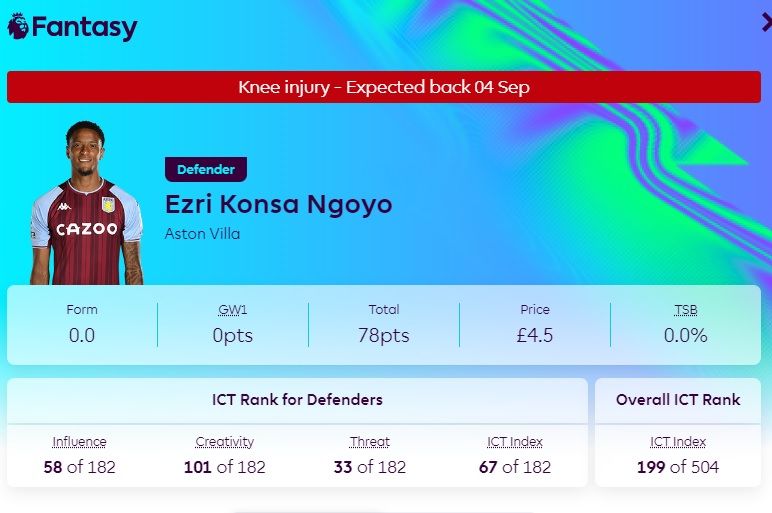
How do FPL price changes work?
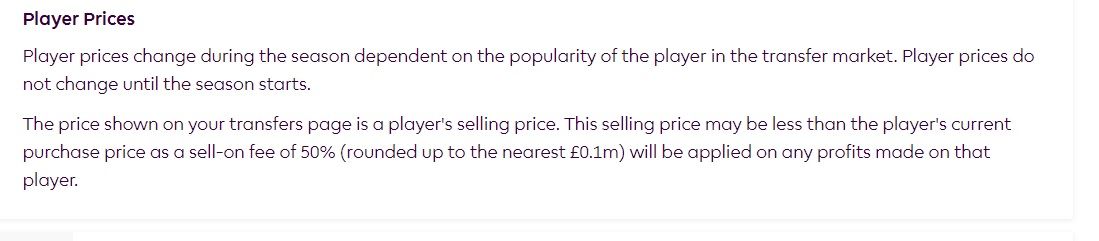
If a player you own rises in value, it doesn’t mean you can pocket the full amount.
Let’s imagine you’ve bought Kevin De Bruyne for £10.0m and his price increases to £10.6m. Though he would now cost a non-owning manager £10.6m, he can only be sold by you for £10.3m.
For every £0.2m price increase during the time that you own a player, you’ll make £0.1m should you choose to sell him.
If you choose not to sell De Bruyne and he rises by a further £0.1m to £10.7m, your sale value would still be £10.3m.
If he dropped to £10.5m, you’d only get £10.2m for him. We like to view it as an agent’s fee of sorts.
This poses both a challenge and opportunity for FPL managers. On the one hand, profit can be made if your transfers are well timed. This increases team value, giving you more funds to spend on the top players.
On the other hand, player price falls can detriment your ability to buy the players you want most.
How can I predict if a player will rise/fall in price?
FPL HQ is not transparent about when and how a player’s price will rise.
While we know that ownership is the key factor in determining price, it’s not as simple as ‘if a player is transferred in X times in a given timeframe, he will rise in price’.
Fantasy Football Hub’s price changes prediction tool was launched last season and quickly became one of the most accurate available. We’ll be using last season’s data to further improve its performance in the 2023/24 season, so be sure to bookmark it!
When do player price changes happen in FPL?
Last season, player price changes happened at around 01:15am GMT each morning, and always between 01:00am – 03:00am.
The timing means that, during a matchday, managers have time to make their transfer decisions before a player’s price changes.
Unless you wait until the next day to make your transfer, you won’t be caught out by a sudden price change.
Price changes in FPL and the Wildcard
Playing your Wildcard in FPL gives you unlimited transfers without incurring any points hits.
If used smartly, it’s a great way to give your team value a quick boost.
That’s because you can freely target any players who you think might rise in price before next gameweek – even if you don’t want them in your final draft.
For example, let’s imagine that Mohamed Salah is a popular incoming transfer. We expect that his price will rise in price by £0.2m before next gameweek, which means you can buy him before his first price rise, wait until his price has increased and then sell him for a £0.1m profit before locking in your Wildcard team.
Conversely, you can also sell any players who are falling in price in your team, buying them back for a cheaper price later in the week.
These tactics are particularly useful during a break in fixtures – like an international break – where a player has more time to rise or fall in value.
A word of caution: always be careful when selling players you intend to buy back. There’s a high chance you’ve already accrued some equity on that player, half of which will be lost once that player is sold.